
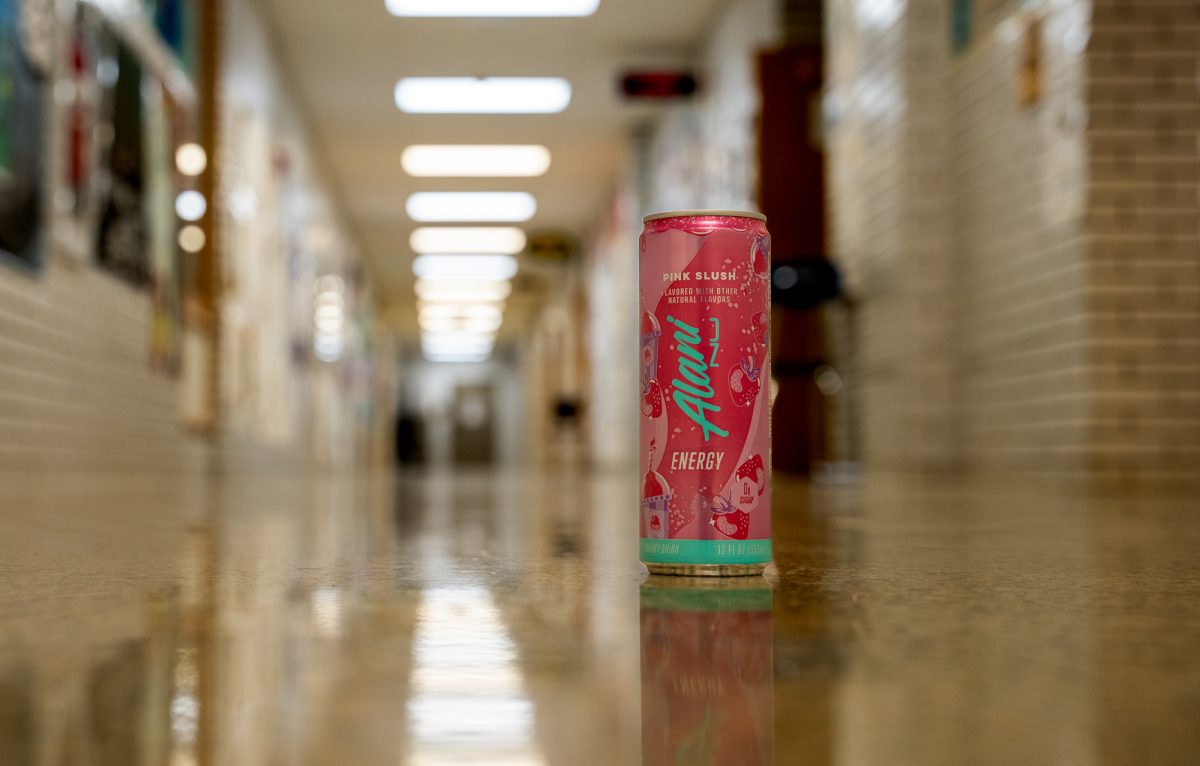
School mornings can be rough. For many, the routine of waking up extremely early, grabbing breakfast, and driving off to school can be nothing short of draining. And then the first bell rings.
The quick fixes for the exhaustion can vary. Some students take the risk of simply arriving late in order to get a few more precious hours of sleep, while others turn to a different solution.
As of late, energy drink sales have exploded, with the industry predicted to reach $125 billion in sales by 2030. Clearly, these products are in high demand worldwide, and this rise in popularity is also evident in our own school building.
“I really have no more than one or two a week,” said junior Sam Peffer. “I only drink them when I have a lot going on.”
Peffer’s consumption is certainly light. It’s nearly impossible to walk the hallways at NASH each morning without seeing students clutching cans of Alani, Celsius, or some other drink that delivers just enough (or way too much) caffeine to make it through the day.
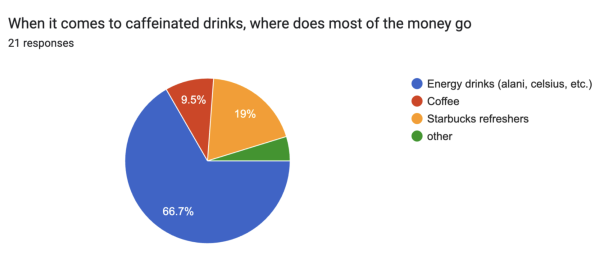
In a brief survey of 21 NASH students, 71.5% of students rely on energy drinks instead of any other caffeinated beverage (coffee, tea, etc). The survey concluded that many students rely on these cans to make it through the day, but that also raises the question of just how much is spent by students to get the energy boost they need.
According to the survey, 52.4% of students said that caffeinated beverages are a large part of their spending habits. 65% of students said that their budget for these drinks sets them back $10 or more per week. Of those same students, 15% said that caffeinated beverage spending takes $20 or more out of their weekly budget.
“I drink one a day or more a week,” junior Gabriela Pizon said. “I usually have one just to stay awake during the day.”
Studies from the National Library of Medicine have shown that heavily caffeinated drinks can have numerous negative effects on a teenage brain, including sleep disruption, heightened anxiety, and heart palpitations.
Still, the energy drink business is stronger than ever.
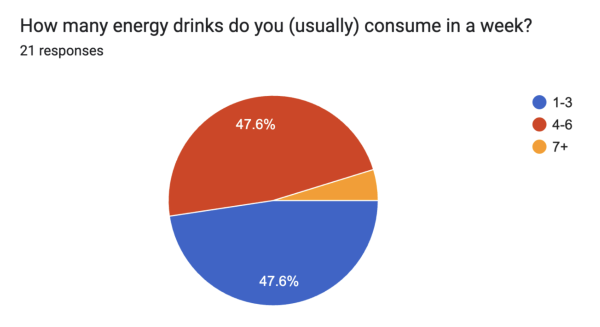
There’s a reason why whenever those vending machines near the NASH gym get fully stocked with Celsius, the cans sell out nearly instantaneously. 47.6% of students said that their weekly energy drink consumption includes 4-6 energy drinks. For four energy drinks, that’s 800 mg of caffeine per week (the average energy drink contains 200 mg, more than twice the amount in a cup of coffee), and a maximum of 1,200mg per week. 4.8% of students reported drinking 7+ energy drinks per week. That’s a drink every day and 1,400mg and more of caffeine per week.
“I drink anywhere between 4-8 a week depending on how tired I am and if I have work before school,” said junior Aero Metropulos. “My sleep schedule is all messed up, and it’s mostly school’s fault.”
In no way is the consumption of energy drinks in moderation a bad thing. Studies have also shown how the boost of energy can heighten mood and concentration throughout the day.
But the negative health effects of daily consumption are hardly negligible — not to mention the sheer amount of cash being dropped by students just to get the temporary buzz that a flood of caffeine can bring.
Any sensible solution must begin by acknowledging how utterly exhausting school, extracurricular activities, and jobs can be for the average teenager. Studies have shown that nearly half of students deal with burnout caused by exhaustion. 70-80% of kids report excessive academic fatigue by the time they hit senior year. It’s no surprise they are turning increasingly to energy drinks.
But students shouldn’t be forced to buy their way through the school day. Surely there must be a better way than draining a paycheck and risking their health on an inevitable crash.
________________________
Editors’ note: All opinions expressed on The Uproar are a reflection solely of the beliefs of the bylined author and not the journalism program at NASH. We continue to welcome school-appropriate comments and guest articles.

James Michael Essig • Apr 20, 2026 at 3:13 am
Outstanding article Juliet!