Albert Einstein once said, “Imagination is more important than knowledge. For knowledge is limited, whereas imagination embraces the entire world, stimulating progress, giving birth to evolution.” However, most students tend to focus on taking academic classes, removing most creative classes from their schedules. In high schools across the country, one could argue that there is a creativity crisis.
Firstly, it is not always the students’ fault that they are not enrolled in creative classes. After the 2008 recession, 80% of schools faced budget cuts, leading many to eliminate creative arts classes.
As the years progressed and the economy improved, the discussion of whether or not schools should reintroduce arts classes has been brought up. However, it may not be enough.
In elementary school, students are introduced to the arts. Whether it be a requirement to go to an art class at least once a week or do a project for a core class that uses common art materials, elementary students are immersed in artistic creation. However, as students progress in age, the requirement to take art dwindles. In fact, in the North Allegheny School District, music and art classes are no longer a requirement once a student reaches grade nine.
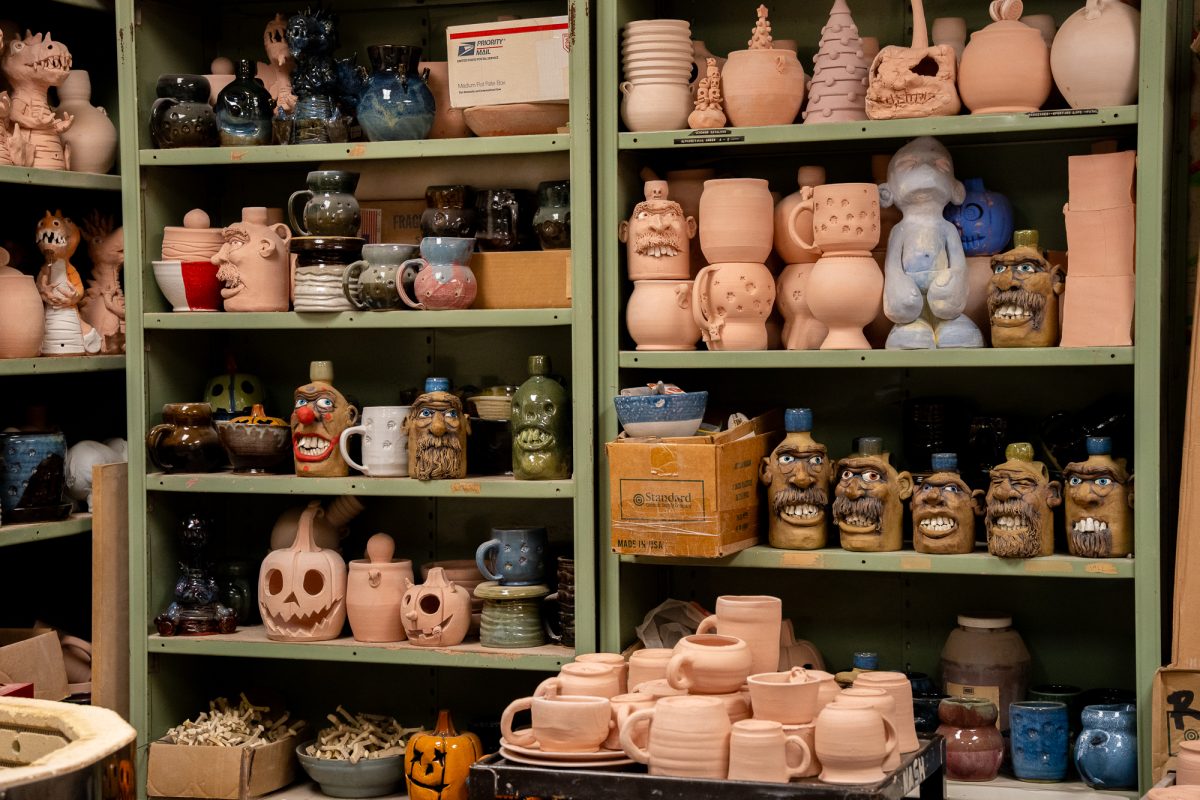
Students of all ages should be encouraged to enroll in a creative arts class. This class doesn’t have to be the typical drawing and painting class one thinks of when they hear of an art class. It could be music-based, writing-based, film-based, or anything else that gets students’ creative juices flowing.
NASH English, film studies, and acting teacher Mr. Joseph Truesdell is aware of the importance of taking a creative class and has encouraged students to enroll in them year after year.
“We have so many classes that are academically rigorous that it is imperative to rekindle the creative experience as well. We want to make sure education remains inspirational and to avoid the plight of becoming the old cliche ‘a place where fun goes to die,’” Truesdell stated.
With so many high-level classes, students often feel like there is no room for creativity.
“Taking several AP classes, doing cross-country and track most of the year, and having work on weekends doesn’t leave much time for fun stuff,” junior Isabella Goehring stated.
Senior Sarah Patterson agreed with Goehring.
“I wanted to focus on different science classes,” Patterson said.
Taking so many high-level academic classes often influences students to believe there is no room for creativity. However, even with the challenges of maintaining a demanding schedule, an addition to a creative class can be extremely beneficial.
“One of the least harmful classes you can take is a creative class, because it is an opportunity for personal growth while expressing who you are,” NASH art teacher Lauren Swan stated.
Truesdell acknowledged that creative classes are crucial for success.
“Success in life manifests from a variety of talents,” he said. “Some of the most successful people in the world have passion and the ability to think divergently. While I think these skills can be found in core classes, electives often hold them as the center of the design.”
Creativity-based electives are often looked at as just fun and easy, but they help in many aspects of school. Taking an art class often improves students’ performance on standardized tests such as the SATs and ACTs.
“In creative classes, there are only all open-ended answers which students are working towards answering, which creates more experience with critical thinking, problem solving all while expressing. This skill can improve a student’s thinking process, which is beneficial across all academic classes,” Swan added.
Creative classes also provide an outlet for students who don’t excel in core classes like science and math. These classes equip students with the resources to express themselves without having to worry about a test grade in a math class.
“The medium, from sculpture to acting, does not define the outcome. The ability and opportunity for self-expression remain paramount,” Truesdell said.
Swan also highlighted the importance of expressing oneself, especially now with various artificial intelligences emerging.
“In our world of automated technology and great amounts of information that is quickly exchanged, it is so important to be engaged in a process that guides a person towards building confidence in individual thinking, promoting individuality and the need to express original ideas,” she stated.
Indeed, self-expression has fueled revolutionary movements throughout history. For instance, pop art pushed the boundaries of what “normal” art was supposed to be in the 1950s. Prominent artists such as Pittsburgh’s Andy Warhol pushed social norms to express himself. Today, his Campbell’s Soup Cans can be recognized instantly as a work of greatness. Warhol’s sense of self pushed him to think beyond societal constraints to create work that nobody had ever thought of creating.
Of course, pushing social norms isn’t easy for everyone. Everyone wants to be perfect, but creating art is never perfect. Students often fear the act of failure the most during their years in school. However, creativity encourages students to fail and create a masterpiece from it.
“Hear me out, the most obvious standout skill noted above is failure, because truly failure is important in learning the creative process,” Swan mentioned.
Often, when art students are exposed to finished works produced by acclaimed artists, they expect their own products to be equally refined. However, the art of creating is a process that inevitably includes failure.
“To arrive at that final idea, there is mess, trial and error, and experimentation, which require perseverance to achieve success in innovating,” Swan explained. “In creative classes, you are challenged with creating original work, which engages you in that full process of working from the ground up. To arrive at the unexpected, you have to be willing to try multiple avenues and accept that some of them will succeed and some of them will fail. There may be obstacles and unforeseen challenges that occur in the middle, and this all teaches perseverance to achieve success, confidence in trying something new, and curiosity and critical thinking to lead to the next idea or solution.”
From helping students excel on standardized tests to learning how to accept failure, creative classes are proven to be beneficial. Taking a creative class can influence opportunities in the near future.
“To arrive at the unexpected, a person may need to use a multitude of their experiences, knowledge, opinions, thoughts, and curiosities to brainstorm new insights, pushing past the known and into the undiscovered,” Swan said. “Creativity requires the use of this individual thinking to think beyond existing ideas.”
So, with NASH scheduling season for sophomore and juniors now underway, students should be encouraged to take a creative class because ultimately there is no harm in taking one, only improving the chances of success in the future.