
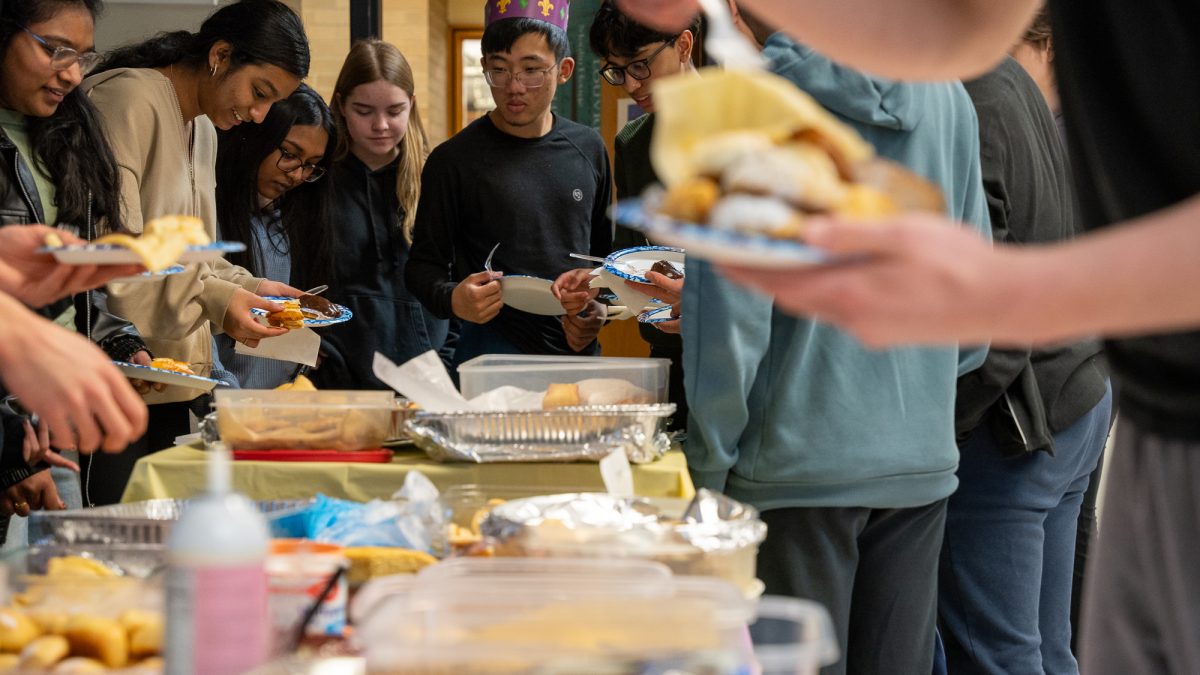
On February 17th, the French classes at NASH collectively celebrated Mardi Gras. A massive amount of traditional French food was brought into Room 214 for all 150 French students to share with one another, and furthermore, to “laissez les bons temps rouler” – let the good times roll.
Mardi Gras, also known as Fat Tuesday, is a holiday that originated in France, which celebrates the final days of the Carnival season and the beginning of the Christian holiday, Lent. It is mostly celebrated in New Orleans, Louisiana through a festival with parades, floats, ball dances, and throwing beaded purple, green, and gold necklaces at onlooking faces in the crowd.
Throughout Madame Butler’s class parties at NASH, some fun facts were shared about Mardi Gras, including how it is memorialized in the modern day, how it demonstrates different forms of symbolism to Christianity and welcoming seasons, and in general the magic behind it.
To Butler, Mardi Gras is extremely meaningful.
“My favorite part of Mardi Gras is that it’s celebrated all over the world. I love how each country and culture celebrates in its own way, whether it’s France’s largest parade in Nice or the Krewes and floats in New Orleans,” she expressed.
The origins of Mardi Gras trace back to Roman times. Many connections were made between this holiday and another called Lupercalia. This was celebrated on the 15th of February and was dedicated to the god of fertility, Lupercus. This took place over the course of seven days with floats and masquerades being the main event. This is one of the only festivities that aligns with the time of Carnival, and other festivals in France have many similar ancestral rituals that are still present in today’s carnivals.
The carnival was also built upon the influence of Christianity. The Latin root of Carnival is “carne vale”, which translates to ‘farewell to meat”. It correlates with the forty day fast of Lent that begins at midnight, officially ending Mardi Gras.
Additionally, Fat Tuesday sparked a tradition of feasts, which prompted those who celebrated Lent to use up ingredients that they were not allowed to eat during the time of fasting. Prohibited foods such as butter, oil, meat, and eggs, began a new practice: Pancake Day. To prevent wasting food, many European countries began encouraging people to make as many pancakes, doughnuts, crêpes, or any other desserts as possible in order to savor ingredients. This prompted the idea of “Fat” Tuesday, establishing the idea of eating fatty foods right before fasting.
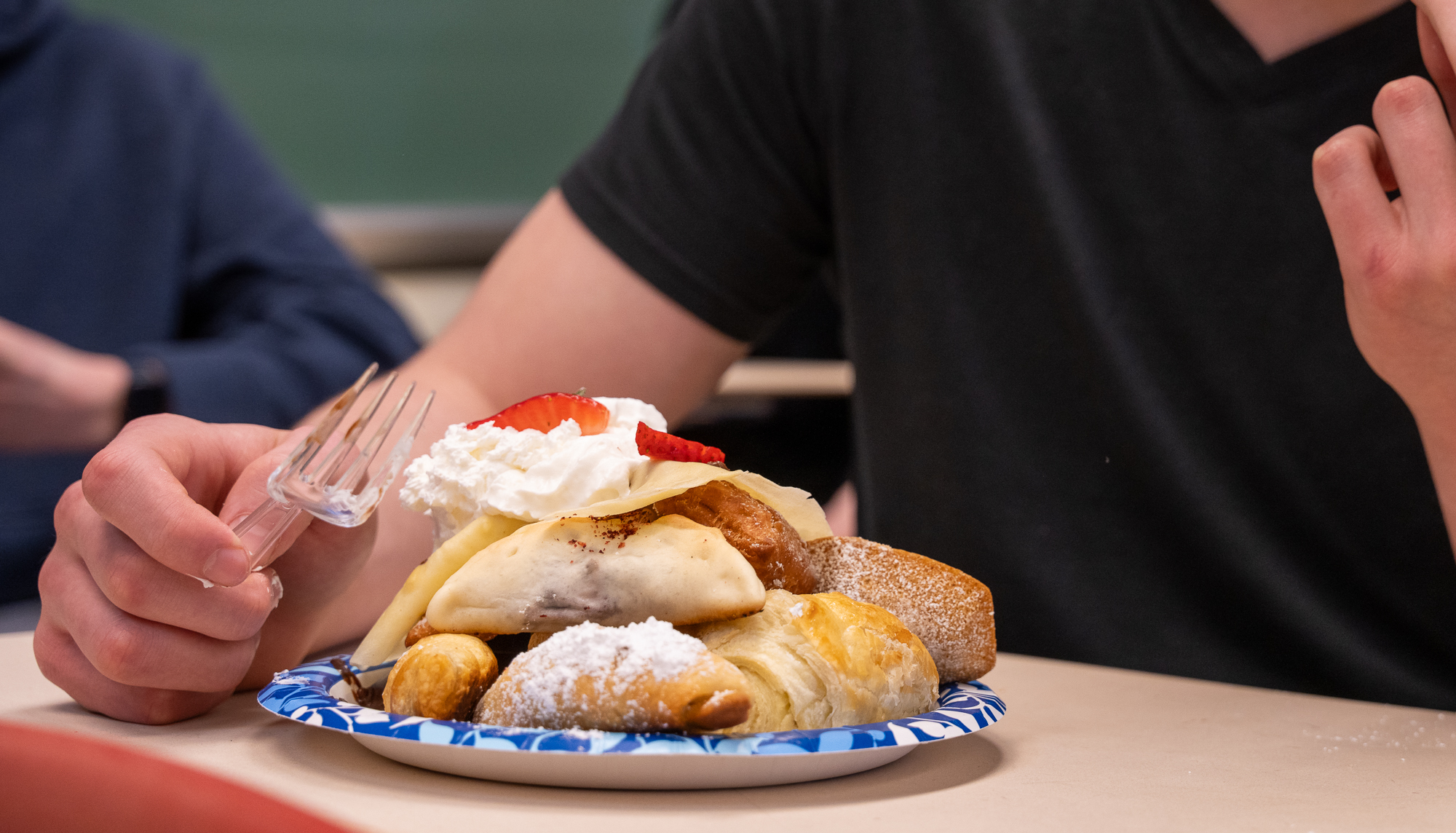
Aside from pancakes, food has always been a giant part of the culture of Mardi Gras. The infamous King Cake, a pastry that includes the three main colors of the holiday: green, purple, and gold. Each represents a different theme of the holiday; green representing faith, purple representing justice, and gold representing power. In some cases, people like to add a small baby doll into the cake, and whoever gets the slice with the baby is destined to have good luck for the remainder of the year and is also responsible for bringing the next King Cake.
Junior Samhitha Bhonagiri made a king cake this year for French class.
“I chose to make it because I wanted a challenge,” she said. “I made a traditional French one and it was really fun learning the technique and process. I’ve never made that kind of pastry before and I’ve always wanted to try it.”
Along with Bhonagiri, senior Ruby Beighley made another French treat.
“I made apple pastries,” she said. “I wanted to make them because they were something I’ve never tried before and I wanted to challenge myself. But ultimately, I really enjoyed it.”
Madame Butler also emphasized that, regarding food, this year was like no other.
“The tradition of asking students to make food started maybe 10 years ago and this year had the most participation and variety ever,” she said. “It was a great time!”

Patty Walker • Mar 1, 2026 at 8:49 am
Great article and research. I never knew the origin was the Roman holiday of Lupercalia or the significance of the “fat” in Fat Tuesday. Can’t wait for your next article!
Shanmukha • Feb 27, 2026 at 8:07 am
French food is so delicious. Great article, Remi!