
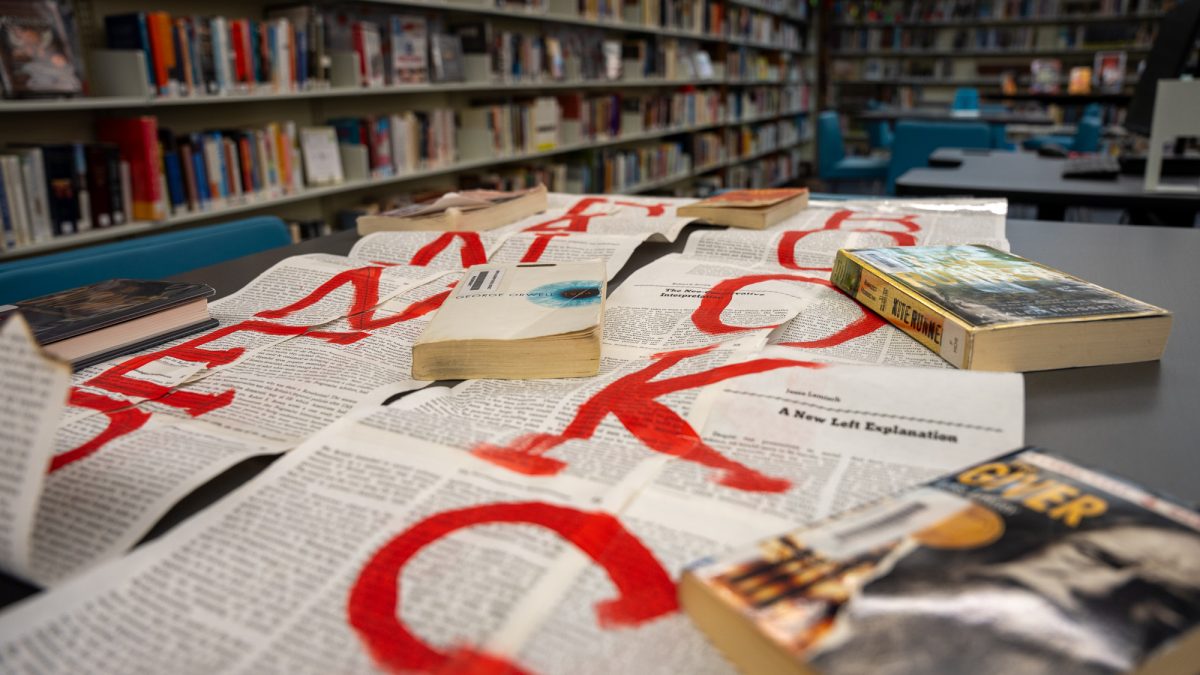
George Orwell’s 1984. Angie Thomas’s’ The Hate U Give. Madeleine L’Engle’s A Wrinkle in Time. All undisputed classics. All banned in some school libraries.
Book bans are mostly initiated by school boards, advocacy groups, and concerned parents who think certain novels are too inappropriate for kids to read. These books vary in themes, with most being related to themes such as race, government, sexuality, and violence. North Allegheny, however, is one of the fortunate schools where commonly banned books are available to students and are read throughout the grade levels.
In my opinion, these ones steal the show.
***
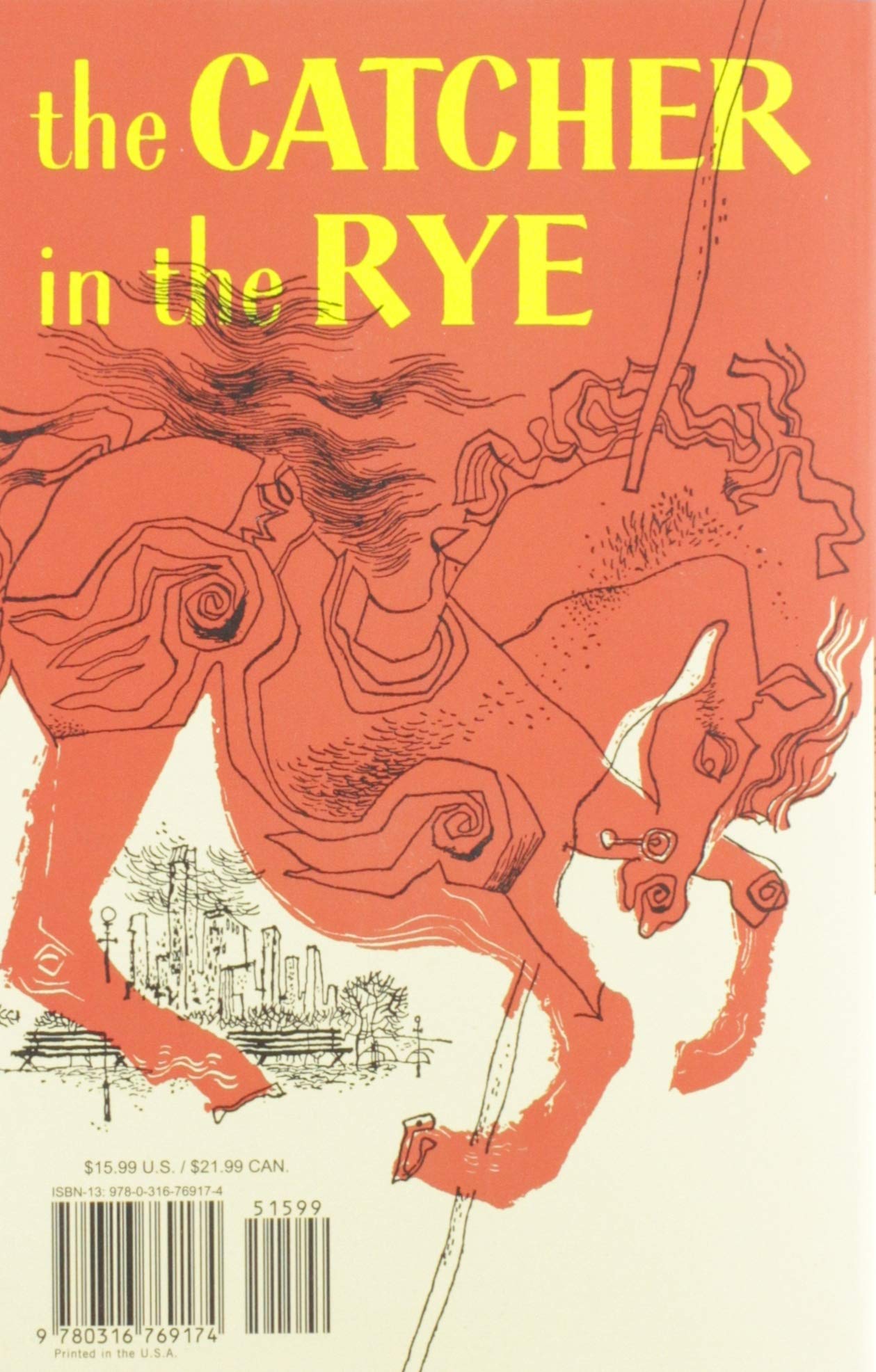
Read in 11th Grade
The Catcher in the Rye was an exceptionally different required novel in my English class this year. It follows the story of a 16 year old boy, Holden Caulfield, who is mentally troubled and has an eventful three days in New York City. Holden fluctuates between wanting to grow up and clinging onto his childhood, leaving him in a permanently “stuck” state for the duration of the novel. From what I observed when Holden’s character was discussed in class, most students did not like him because of his angsty attitude and his active complaining. Personally, I found him extremely relatable. It led to my appeal for the book because it showed his true emotions without explicitly saying it out loud, which usually is uncommon in writing styles. I think this approach makes the novel ironic, since all Holden wanted was to be heard and understood, which I think most teenagers truly want, yet teens who read the book dislike Holden because of that reason. In my opinion, this book is one of the few books in the English curriculum that focuses on the emotional state of a character my age, showcases how observant yet naïve teenagers can be, and touches on themes of mental health among youth.
Read in 11th Grade
There are many books that students are required to read that are about either race or religion, and particularly, they do not interest me as much as a fantasy or sci-fi book would, yet they are still important to read. The Color Purple, however, appealed to me greatly when I had to read it. Celie Harris, the main character, has a traumatic childhood that seems to follow her throughout life. She finds herself in abusive situations, where she is completely discarded, works hard, and stays silent, writing to God in a journalistic way to explain her troubles. Celie grows more independent as the story progresses, and her viewing of religion changes, too. Her previous letters to God switch to letters to her sister, Nettie, because to Celie, Nettie actually uplifted her and responded when she needed it. The main reason why I love this book is because it shows that it is not blasphemous and evil to question faith, and Celie explores this in a beautiful way.

Read in Summer before 11th Grade
While summer reading is dreaded by most, I could not have been more grateful that I picked The Kite Runner as one I wanted to read going into junior year. The story follows two boys, Amir, whose family is fairly well off in Afghanistan, and Hassan, the family’s servant. The boys are like brothers; they are inseparable, and both love the sport of kite-fighting, yet a traumatic moment in both their lives divides them completely. This event seemingly haunts Amir for the rest of his life with many parallels, conveying to him that you cannot run from your past. This book touches on social class, the switch Afghanistan makes from its peaceful state to war and the Taliban’s takeover, and personal sacrifices Amir has to make in order to make up for his past mistakes. The reason why I liked this book so much is because of how it displays human connection by the two main characters being disconnected. It shows how a single privileged life could change in an instant and how karma really works on those who deserve it, while also displaying the ends someone will go to avenge their loved ones and right their wrongs.

Read in 8th Grade
While other banned books criticizing different governments like 1984, Fahrenheit 451, and Animal Farm seem to be the most popular, I think that Lord of the Flies conveys this in a particular way which is both enjoyable and symbolic. The story centers around a group of sophisticated British schoolboys who crash-land from a plane on a deserted island and have to survive on their own. The boys’ lives slowly deteriorate because of disputes between two boys, Ralph and Jack, over how the community of boys should be run. Jack eventually takes over, enforcing savagery as their way of life on the island, while hunting for the only one who stands their ground and opposes them: Ralph. I personally like how it does not outright say that this book is criticizing the government, and it has to be adapted through the reader’s eyes. I also like how this was introduced to students at 14 years old so they could put themselves in the place of the boys (similar to Catcher), giving a better understanding that corruption, instability, and targeting could affect anyone.

Read in 7th Grade
This book was a fan favorite for most of the 13 year olds across all of the middle schools. It takes place in the 60’s, and follows the story of a lower class family navigating their way after their parents’ death. Ponyboy, the main character, experiences many life-altering things in the span of just a few days. In the end, it is revealed that he wrote about these experiences for his English class, and The Outsiders was actually his report. However, I believe that the actual plot of the book may have gotten lost behind the likeable characters and intense fights that went on throughout the story. The book focuses on themes of loss, gang violence, and class differences, and it displays it in a way that can be appealing to kids that young. This book holds fond memories from middle school because it genuinely brought together every single student. Everyone was invested, dressed up as greasers during Outsiders Day, and intently watched the movie in the auditorium. I feel like that was the last time something like that happened as a student body, which is why this book is one of the best.
6. The Giver
Read in 7th Grade
The Giver was a less-liked novel in the interest of 7th graders, yet one that I took a liking to greatly. The book is set in a dystopian society where the people who run the community decide what is best for the civilians. What they do not realize is they are taking away what makes humanity special. Things like the ability to see color, the right to question how things are run, and memories of history are stripped away from the people, and only one person is in charge of holding onto all these memories. Jonas, the main character, escapes from the community, returning the memories to the people and bringing back what was meant to be. While it is a touching story, it is honestly a scary concept to think about. It shows how uninformed and brainwashed a group of people could be if leaders really wanted it to be that way. The actual story shields the darker side of how society functions – or could function – under circumstances of just “wanting what’s best” for the people. I liked The Giver because it leaves readers with a satisfied feeling of the community getting what it needs, yet also uneasy with the fact that they were unaware for so long before, and it could have gone on with no change at all.

Patty Walker • Apr 17, 2026 at 8:54 pm
A thought provoking article about a controversial subject. The books you chose to focus on are some of the great modern novels ever written. No book should be banned. We all should have the right to choose what we want to read or not read.
Sheep • Apr 17, 2026 at 11:01 am
They call me a banned book bandit.