
Earlier this year, I was sitting in my English class, and I realized something that made me very frustrated. You see, we were talking about Emily Dickinson—her poetry, her life, and her inspirations. We even spoke about her male lovers. However, I noticed someone who was missing from the notes we took in class: Susan, Dickinson’s sister-in-law and closest confidante.
Historians now believe that Dickinson was in love with Susan, considering the way she expressed her affection in the hundreds of letters and poems she wrote for her. In her life, Dickinson wrote over 250 poems for Susan, with lines that stated “my heart is full of you” and “I must have her, oh, give her to me.” And yet, in class, we did not speak about the woman who seemed to have such a great effect and inspiration on Dickinson’s works.
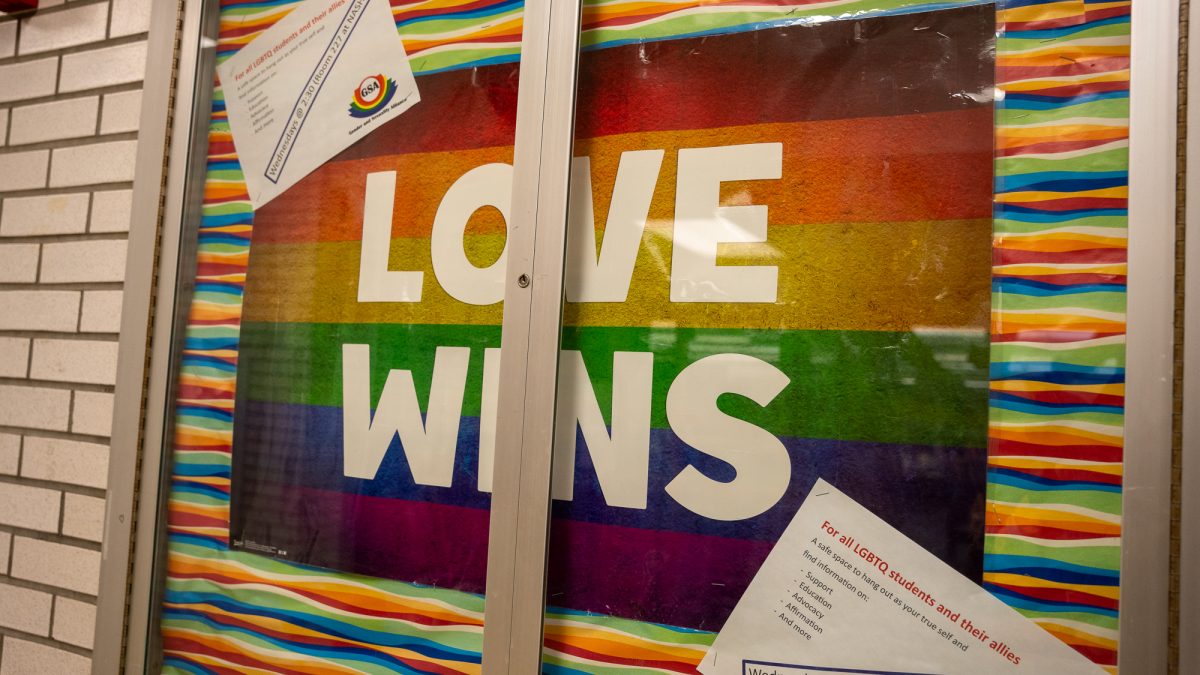
With the rise of Heated Rivalry, a lot of attention has been brought back to the queer community in recent months. While the show is centered around adults, the situation is similar to that faced by many high schoolers: being part of the LGBTQ+ community in a setting that may not be very accepting.
For lesbian, gay, bisexual, or queer students, coming out is important for living an authentic life, improving mental health, and building relationships. However, coming out in a high school setting can lead to victimization, and many students experience bullying.
The world has made significant progress in recent years when it comes to people who identify as queer; supportive groups and communities have grown, and allyship has expanded exponentially.
NASH has resources—such as the Gender-Sexuality Alliance (GSA)—that can make being queer in high school easier, but going about everyday life as a homosexual teenager can feel really isolating for some teens when they’re not in that welcoming environment.
“I came into North Allegheny from a small private school where everyone was really accepting, so coming into a really big school where it was not that accepted was a huge culture shock.” NASH senior Suna Ruiz said, “It was kind of obvious that I was gay, and I got bullied a lot in my freshman year, but I just ignored them or reported them. I did that through sophomore year, and after that people stopped bothering me about being gay.”
According to Ruiz, expanding one’s social circle can be helpful.
“I also started being friends with a lot of different people and not just limiting myself to other gay people,” they said. “I think just making friends in a bunch of other groups and cliques of people helps you feel a lot more accepted.”
However, for NASH senior Denisse Matos-Perez, the large-school experience at NA offered a positive experience from the start.
“I have honestly had a good experience being queer in high school, and I owe a lot of that to NA,” she said. “I have been able to be out and proud since 6th grade, and I have been able to casually talk about any crushes or girlfriends of mine without anyone batting an eye or silently judging me.”
But Matos-Perez acknowledges that others’ experiences may vary from her own.
“My brother used to go to this school and did not experience the same thing I did,” she said. “Every now and then, there’s subtle homophobia, but it is not the overwhelming majority. People who are subtly homophobic don’t tend to know they are being homophobic in the first place. I appreciate the culture having changed, and I feel as if NA has a very good queer community. I am glad to have gone to this school for that reason.”
NA staff and students do an amazing job at providing support and giving teens a place to find community.
“My advice for others who are queer in high school is to be who you truly are because the people in this school are not going to judge you for that,” Matos-Perez said. “It is better to be true to who you are and find people who accept you rather than fake a version of yourself so that others will like you. You will find your community.”
_______________________________
Editors’ note: All opinions expressed on The Uproar are a reflection solely of the beliefs of the bylined author and not the journalism program at NASH. We continue to welcome school-appropriate comments and guest articles.
Sheep • Apr 30, 2026 at 11:38 am
❤️❤️