
All teenagers are irresponsible.
All elderly people are weak.
Do those two statements irritate you? They should.
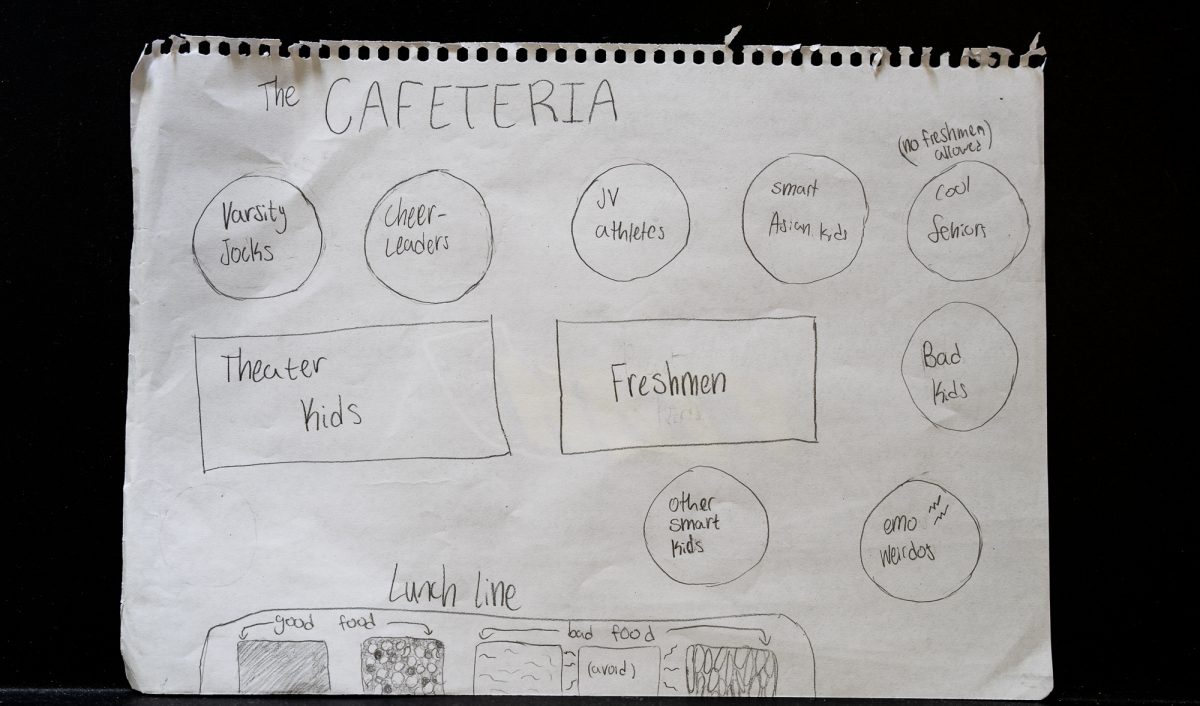
Stereotypes surround our everyday lives, fueled in large part by the media. In movies, for instance, it is often shown that the defining feature of schools is the separation of students based on ethnicity, interests, and personality traits.
How often have we seen movies or TV shows where the school lunchroom is divided into jocks, theater kids, mean popular girls, the smart Asian kids, weird band kids, and so on?
In actuality, teenagers are much more diverse. Most of us don’t only hang out with one group of people. We float in and out of many different groups and don’t rely on simple labels to navigate our four years of high school.
The human brain is designed to recognize patterns, so the tendency to stereotype has a psychological foundation. There is a cognitive need to simplify and process what we see in this complex world, but stereotyping is also a precondition for bias and harsher forms of discrimination. Sure, generalizations can be useful for making quick, rational decisions, but continuing to hold onto such ideas can often prove to be damaging.
Something I often see in school is that others seem to think that quiet kids have no friends, are weird, or unable to socialize or work well with others, when this is often not the case. Quiet kids are often just shy, don’t know how or simply don’t want to approach others, or some other reason. Some people are simply quiet around others that they are not comfortable with, and there many things that factor into how someone acts in social situations.
Another common stereotype is that students who dress alternatively are rude. Students who style is goth, punk, and emo are often judged, ridiculed, or considered unapproachable just for how they present themselves. Of course, a dress style does not define someone’s personality, and there are many alternative people who are very kind but are still mistreated.
Academic stereotypes can be just as common.
“A lot of people think that if you don’t take AP or honors classes, you’ll be set up for failure, but I know lots of very smart people who don’t take higher level classes,” NASH junior Song Park said.
Likewise, intellectual handicaps can lead to inaccurate judgments about others.
“Some say that people with dyslexia aren’t intelligent or can’t take hard classes, but that’s not true,” NASH junior Aiden Smith said.
Teachers notice these stereotypes as well.
“In the classroom, a lot of people think that English and other humanities classes are more girly, but this year I have more boys in English and participating in the class,” NASH English teacher Mrs. Long said.
While it is clear that stereotypes are a common occurrence, especially in high school, we can all do better to minimize their damaging effects. After all, people are not made up of the activities they participate in, the people they spend time with, or how they present themselves.
_______________________________
Editors’ note: All opinions expressed on The Uproar are a reflection solely of the beliefs of the bylined author and not the journalism program at NASH. We continue to welcome school-appropriate comments and guest articles.

Kim Arteel • Nov 11, 2025 at 8:49 am
I look forward to read your profound life observations on a public format. You are part of the future that offers hope to enjoy a considerate and caring society.
Please continue your efforts and profound thoughts.
Kim Arteel