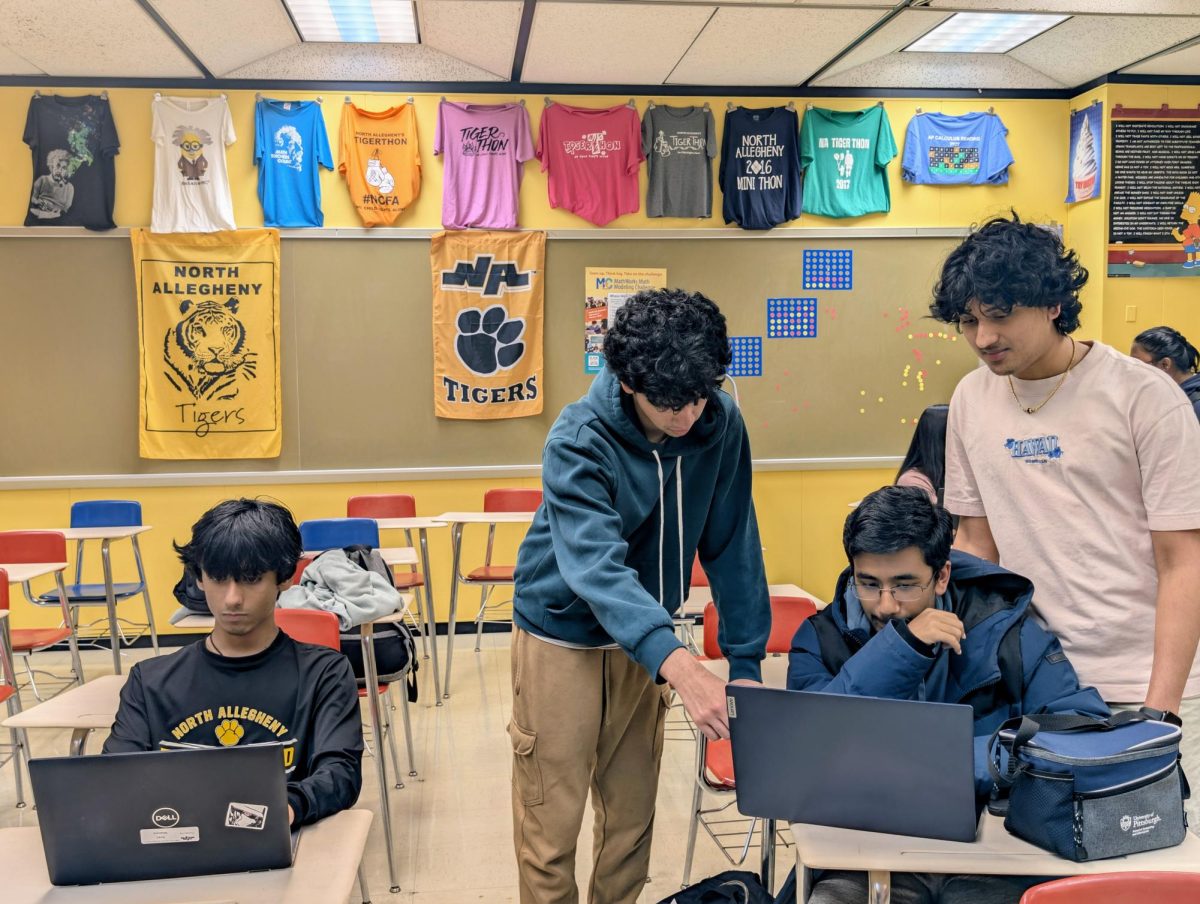
In 2025, a new club at NASH popped up: ScienceGlimps. The team behind ScienceGlimps has worked tirelessly to expand and improve the club, but what exactly is ScienceGlimps?
Co-Founder and Director of Strategy & Lead Task Manager Ansh Sharma explained, “It’s a club based on the website ScienceGlimps, created to make science more accessible and understandable for everyone. We allow anyone to write for our cause and join one of our teams to help with website outreach and management.”
This week’s ScienceGlimps meeting, which occurred on Wednesday, focused on the media team.
Aarav Madan, Co-Founder and Director of Media & Creative Innovation Outreach, said, “This meeting was to film our next video with the media team about the myth that mice like cheese, work with outreach to brainstorm more ways to make our website more well-known, and update the website code.”
Their idea stems from a problem found in many science articles.
Co-Founder, Executive Director, and Head of Logistics Mihir Harinath explained, “The idea was actually inspired partially by our own experiences. We are all interested in STEM, but every scientific concept we searched for led us to confusing, long, and boring articles. To solve this, we set out to change these articles to be understandable for everyone while also making them fun and short, so users can stay engaged.”
Most students are intimidated by STEM articles and research papers because they use a lot of jargon. The team’s goal is to simplify these papers into five-minute, easy-to-read articles that introduce more people to STEM.
The website allows anyone to submit their own articles.
As Saanvi Palagani, Co-Founder, Chief Editor, and Publicity Director, said, “We look for creativity and originality in writing. Members write articles about any scientific topic they would like. The requirements are that the article must be between 800–1500 words, engaging, and understandable to all audiences. We encourage writers to explore the significance of the topic and include current research so readers understand that not all questions have been answered yet.”
Since anyone can submit an article to ScienceGlimps, the process of editing can be time-consuming, but the team has found a solution.
Palagani explained, “It was a bit hasty the first time around, but now that we have a rubric and more systematic editing assignments, the process has sped up significantly while retaining quality.”
Currently the website is up and running, and the coding team is working to add more features and fix technical issues.
Ayush Srivastava, Co-Founder, Head Programmer, and Lead Technical Coder, stated, “Our coding team is off to a great start. The team is heavily focused on improving the design and functionality of the website in order to offer the best user experience. Our tasks include adding new articles and implementing new features, such as our ‘Random Article’ button. We are also researching whether ScienceGlimps should add a back end to the website.”
The media team has also been working to create and upload videos on social media to boost their influence.
Medhansh Garadala, Co-Founder, Executive Director, and Head of Logistics, said, “We are in the phase where we will begin uploading weekly and spreading our message across various social media platforms beyond YouTube, including Instagram, Facebook, and TikTok. Our shorts regularly receive over 1K views and are expected to continue growing.”