
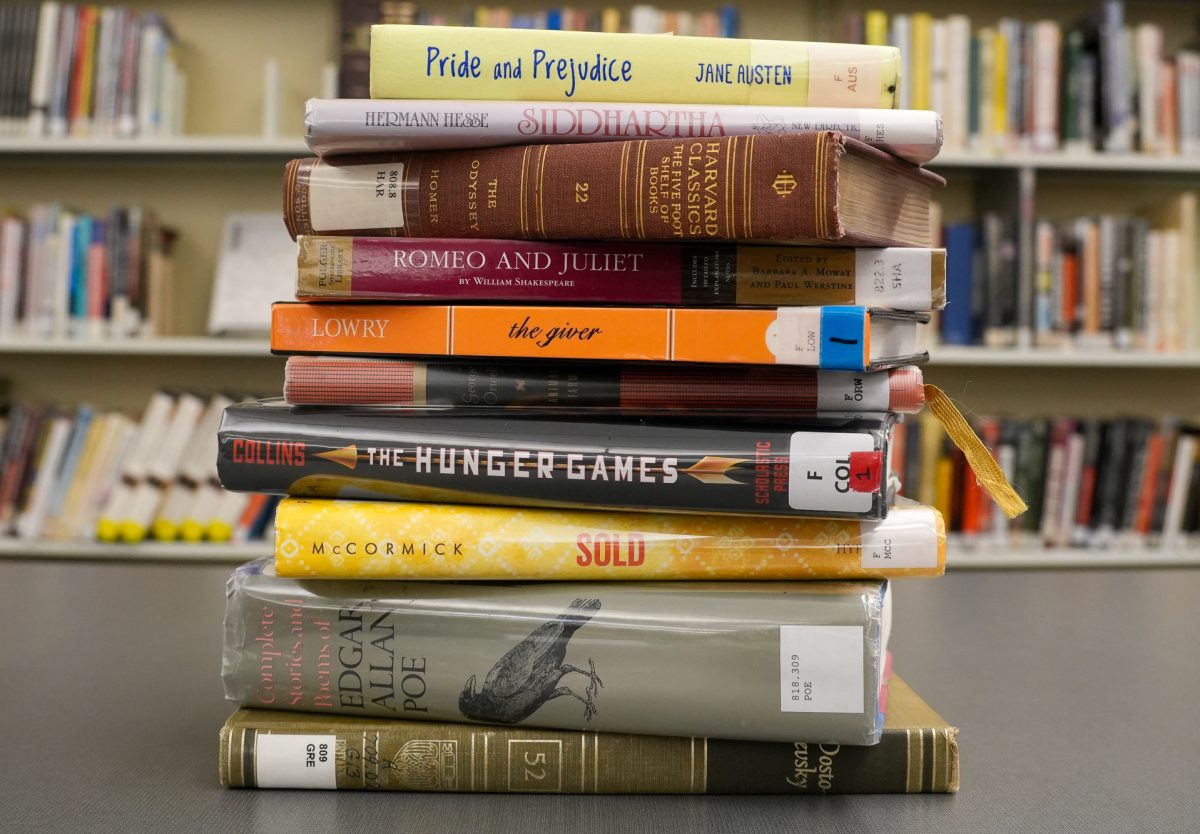
Throughout a student’s academic journey from elementary school to NASH, they are presented with a variety of novels and plays to read, dissect, and discuss. After twelve years of English education, what books are the most loved — and hated — among NASH students?
In middle school, North Allegheny students are first introduced to assigned novels in their English classes. The Outsiders, Call of the Wild, and The Giver are among a variety of classic novels that are read throughout sixth, seventh, and eighth grade. These books focus on building a strong foundation in reading for students, along with providing them with books that are considered a challenge for their age level.
“I really enjoyed reading Where the Red Fern Grows in seventh grade, even if it was very sad,” said NASH senior Lily Stites. “It was very heartwarming.” Where the Red Fern Grows is a coming of age novel centered around a young boy and his two coonhounds as they are faced with tragedy, teaching readers lessons of loss and perseverance.
Other students preferred books that were more action packed and quick paced, such as junior Logan Dreger. “I loved reading Lord of the Flies in eighth grade because I like how it shows the deep animal instincts that are present in everyday people that shine when there are no societal rules,” he explained. Lord of the Flies is an academic classic that tells the story of a group of schoolboys who crashland onto a remote island, exploring themes of civilization, order versus chaos, and the primal characteristics of humanity.
Once students enter high school, they are presented with different books depending on the level of English that they choose to take. Each class, including Academic, Honors, and AP English, explored different novels, each possessing important lessons for their readers. These books give high schoolers the opportunity to discuss different themes and come to their own conclusions about the importance of each story.
For instance, the novel The Catcher in the Rye teaches students about growing up and facing the intense challenges of adulthood, along with exploring themes surrounding grief, loss, and alienation. This book is read by students Honors English 3.
For Kirsten Karlovits, a NASH senior, the assignment was not a favorite.
“I hated The Catcher in the Rye,” she explained. “It was very dry and boring.”
For other students, such as NASH junior Gael Martinez, The Catcher in the Rye connected on a deeper level, reminding them of their own personal experiences and struggles.
“I loved reading The Catcher in the Rye because it reminded me of my journey from Mexico to the United States,” he said.
In sophomore year, many students learn to read epics, a lengthy type of poem narrating tales of heroic figures and legendary events. Homer’s Iliad and Odyssey, along with Virgil’s Aeneid, are three epic poems that are analyzed by students at NAI.
“I hated reading the Iliad and the Aeneid,” said NASH senior Ray Shanahan. “They were so confusing and we spent half the year reading them.”
In senior and junior year, students analyze other classic works, such as The Crucible, The Great Gatsby, Moby Dick, and Macbeth. These books present the highest level of challenge that high school students face during their twelve years of school, asking them to analyze themes and ask questions about novels and their application to everyday life.
“Last year we read a lot of good books, and I liked The Glass Castle a lot,” added Shanahan. “I also really liked The Great Gatsby.”
It was easy for NASH senior Samantha Schroeppel to name her favorite required reading from seven years of English classes.
“I found Hermann Hesse’s Siddhartha to be especially enjoyable and unique in the way its themes were open to one’s personal interpretation,” she said. “A lot of the analysis we did in [AP English 4] surrounded self-reflection on the book’s message in regards to each person’s individual experiences — it felt refreshingly distinct from the traditional books studied in English class.”
As students progress throughout high school and look toward their futures, they have an arsenal of classical literature under their belts that will help them to analyze and make sense of the world. For those attending college, their exploration of reading will surely not be the end, with many books and essays awaiting them in their future. These students can rest assured that they are fully prepared for whatever awaits them in their next step toward education.

Andrew Gwon • Jan 22, 2026 at 1:46 pm
Our curriculum really does have a lot of books. Personally, I’m quite glad this school spends time reading classics like The Great Gatsby or Moby Dick. Without it, I doubt many would find the opportunity to read them otherwise…